

In 2026, chasing clicks, impressions and vanity metrics is no longer what digital advertising is about. Nothing in the world is more valuable to businesses than actual users. Not the traffic that looks good in reports. Not likes and views that never lead to a sale. Real people who are looking to buy or rent something, book a service, subscribe to your mailing list or hit you up with questions.
Fast-growing yet very different creatures, Google Ads and Meta are the kings of digital advertising. Both can be effective, but they don’t attract the same customers or see them follow the same path. But knowing that difference is what distinguishes successful campaigns from money down the drain.
This post dissects Google Ads vs Meta Ads in 2026 including customer quality, intent, cost and real business results (not just vanity metrics).
In 2026, “Real Customers” Matter More Than Clicks
Clicks have never been so cheap to purchase, real customers (not bots) have never been more difficult to acquire. Amid greater competition, sharper users and tougher privacy rules, businesses can no longer afford for their campaigns to simply look good on dashboards.
A genuine customer in 2026 is one who:
• Has a clear need or problem
• Understands your value
• Takes meaningful action
• Is something that offers long-term business value

It’s a bit like how Google Ads and Meta Ads consider this customer journey from two ends of the spectrum. One captures intent. The other creates demand. That difference is significant when making a decision about where to invest.
How Google Ads Will Pull in Customers by 2026
Google Ads services are intent-based. People turn to Google when they’re actively looking for answers, solutions, products or services. When a user types something into Google, they’re telling you exactly what they want.
In 2026, Google Ads remains one of the most powerful channels for capturing customers who are ready to act. Search campaigns, Performance Max, Shopping ads and local ads are all designed to find the right solution for users at the right time based on their intent.
The biggest strength of Google Ads is timing. You are not interrupting someone. You are showing up when they are already searching.
For instance, someone typing in “emergency plumber near me” or “best CRM software for small business” is much further along toward conversion than a casual social media browser. Google Ads links your business to that urgent or clarifying moment.
Google is also much better at automation. Smart bidding, AI-powered keyword matching and predictive audience modeling enables campaigns to focus on actions that really matter: real conversions, not just surface clicks. And now, in 2026, Google Ads is more data-centric than manual.
That being said, Google Ads is not magic. You are still wasting your money on landing pages that fail, offers that suck, or messaging that isn’t clear. Google serves the intent, but it’s your site that needs to convert that intent into an action.
How Meta Ads Get Customers in 2026
Meta Ads works differently. It doesn’t capture intent; rather, it creates interest. On Facebook and Instagram, people do not want solutions. They scroll and watch videos, chat or browse.
Read this article to learn more about Meta ads: What are meta ads?
In 2026, Meta Ads becomes even better at moulding higher awareness, impacting choices and navigating users through discovery. It’s particularly powerful for products or services people didn’t know they needed.
Where Meta is strong is around audience data. Interests, behaviors, engagement history and lookalike audiences enable advertisers to buy ads that reach people who are like their best customers — even if those people aren’t currently searching.
This makes meta ads campaign ideally suited for:
• Brand building
• Product discovery
• Retargeting website visitors
• Visual storytelling
• Scaling offers once proven
Meta Ads generally take extra steps but we get more bang for our time spent. A user can view your ad today, interact tomorrow, and convert days or weeks after that. That does not make the platform weak. This means a longer trip.
Meta AI (2026) for targeting but a good creative is more important than ever. Bad visuals or generic messaging will turn people off in a second.
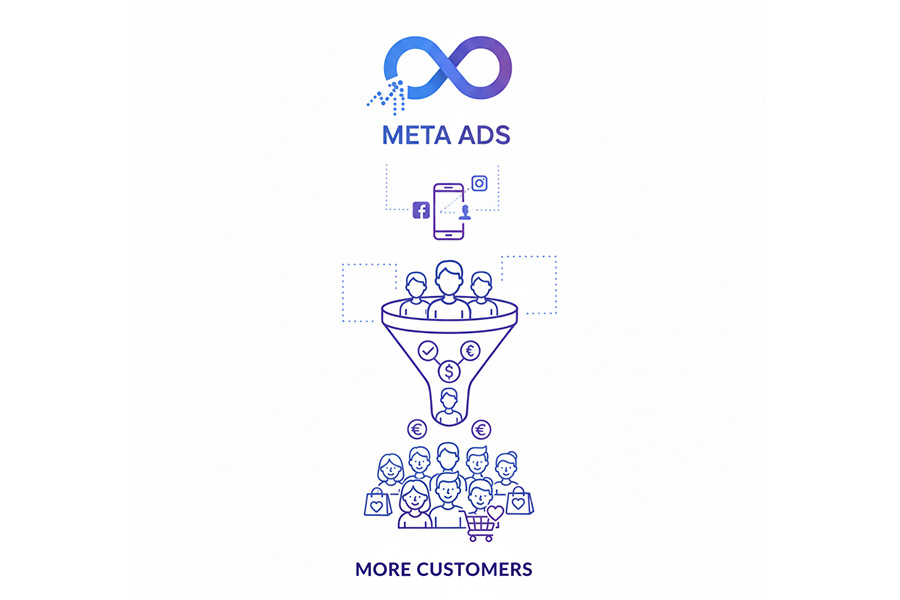
Meta Ads doesn’t tend to get buyers immediately. It simply delivers future customers who require trust, repetition and clarity before they do anything.
Google Ads vs Meta Advertising: Fundamental Differences That Influence Customer Quality
The primary difference between Google Ads and Meta Ads? User mindset.
On Google, users are problem-aware. They want something, and they’re going to get it. On Meta, users are discovery-oriented. They might not even realize they have a problem at this point. This impacts customer quality differently.
Google Ads customers tend to convert faster. They come in with urgency or intent, making them easier to close. Meta Ads customers take longer to convert, but when nurtured properly, they often become more loyal.
Another distinction is control versus influence. Since in Google Ads you control keywords, intent signals AND DIRECT DEMAND. Meta Ads allows you to control perception, interest and desire.
There is no best way of doing it. They just serve different stages of the buying process.
Which Platform Brings Higher-Quality Customers?
The response depends on how you define “quality.”
If quality for you means quick conversions, shorter sales cycle, or high purchase intent – then generally Google Ads wins. This is particularly true for services, urgent needs, B2B solutions and local businesses.
If quality is brand loyalty, repeat buying and long-term engagement, Meta Ads often does better. That is the case with e-commerce, lifestyle brands
, subscriptions and any product that needs education.
The truth is, many businesses fail because they want one platform to be the end all be all. They run Meta Ads thinking someone’s going to buy right now, or Google Ads expecting brand loyalty.
Customer quality increases when they use platforms for what they are good at.

Standard Business Mistakes on Either Platform
One of the most common errors is using one message everywhere. A Google search ad and an Instagram Reel should not sound alike. The user mindset is different.
Another error is to misjudge platforms too soon. Good old Meta Ads often take time and repetition. Proper keyword intent and landing page alignment need Google Ads.
A lot of businesses are also measuring the wrong things. The true story is covered up if you only look at CPC or CTR. In 2026, quality of conversion and retention and lifetime value matters more.
Compare Costs Across All Bidding Strategies in 2026 (CPC, CPA and ROAS)
Costs are up on both platforms, but it’s value based more on efficiency than raw figures.
For Google Ads, the CPCs are normally higher too, since there’s a strong intent. You are being asked to pay for demand that is already there. Yet high CPC does not always indicate low performance. Even if conversion rates are good, CPA and ROAS can still be great.
Meta Ads frequently have lower CPCs and are generally cheaper for reach, though conversion costs may hinge on creative quality and audience targeting. Cheap clicks are irrelevant if people aren’t in a buying state.
In 2026, smart advertisers tune less to platform cost and more to outcome efficiency. A more expensive CPA can be acceptable if the lifetime value of the customer is good. A high ROAS doesn’t mean much if the refund rate or churn is high.
It’s not Google Ads costs vs Meta Ads costs, it’s cost for a real customer who hangs around.
The Wisest Approach in 2026: Google Ads or Meta Ads or Both?
The smartest play in 2026 is not to pick one platform. It is constructing a system in which they both operate.
The state where Google Ads captures people who are ready now. Meta Ads grows people who’ll be ready soon.
A typical good structure is this:
Meta Ads creates awareness and retargeting pools. Google Ads captures high-intent searches. Meta retargets Google visitors. Google reinforces Meta-driven demand.
This is a loop in which each platform feeds the other.
Companies that depend on one platform inevitably bump up against growth ceilings. Companies that marry the two tend to scale more responsibly.
Advertising on Google & Meta with Goognetic
At Goognetic, we don’t have a Google Ads vs Meta Ads rivalry. We regard them as instruments with varying degrees of effectiveness.
Our approach focuses on:
• Knowing customer intention and behaviour
• Selecting which platform is used for each stage of the journey
• Matching ads to landing pages
• Measuring real conversions not vanity metrics
• Focused on the quality of customers, not just quantity
If you need instant leads, scalable sales or long-term brand growth we create plans that integrate Google and Meta to suit your business.
Winning brands don’t exist everywhere in 2026. They are where it counts the most. Both Google Ads and Meta Ads can put actual customers, not just numbers on a screen, in your hands with the right plan of attack.

